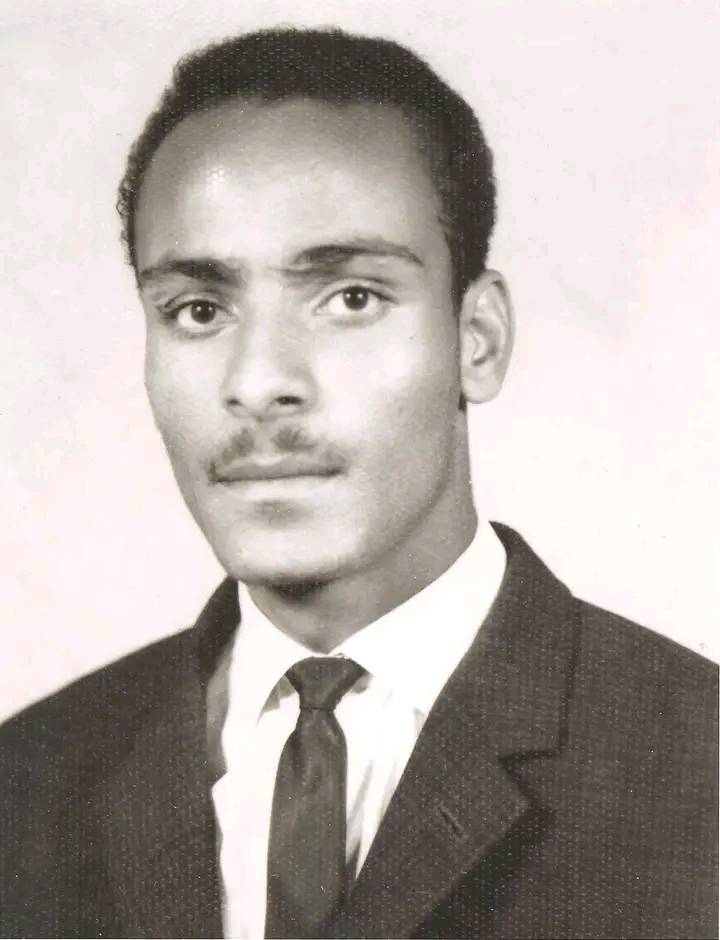
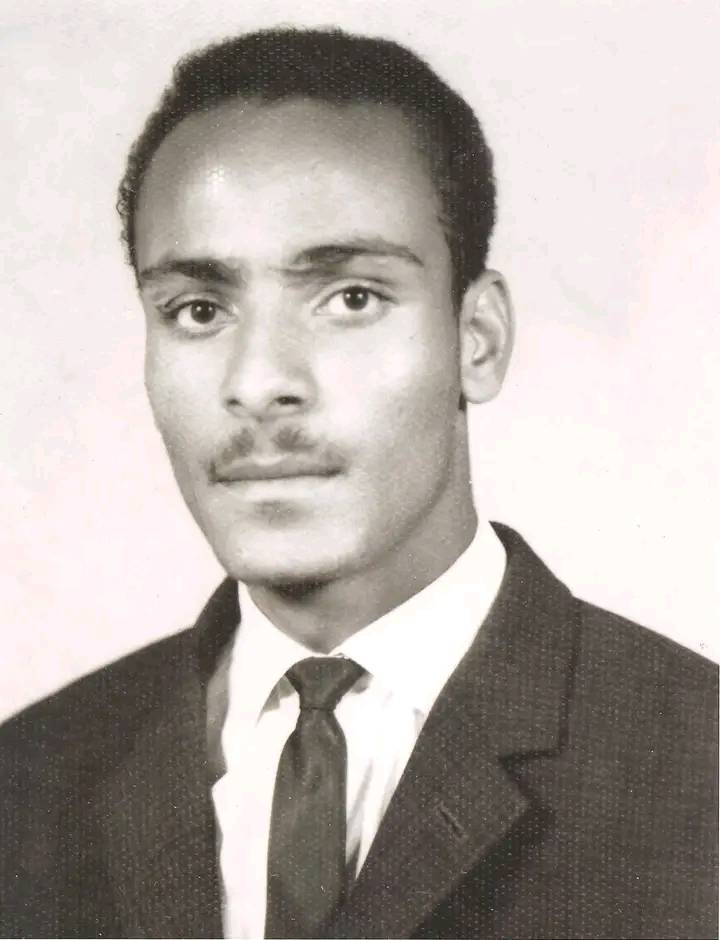
Wallelign Mekonnen (1945-1972) was one of the most influential student leaders in Ethiopian history. A revolutionary thinker, fearless activist, and visionary writer, his ideas and writings continue to spark debate and inspire new generations of thinkers and activists across Ethiopia and beyond.
Born
1945, Wollo Province
Education
Haile Selassie I University
Field
Political Science
Legacy
Father of Ethiopian Student Movement
Jump to:
Early Life
Early Life
Wallelign Mekonnen was born in 1945 in the Wollo province of Ethiopia, into a society marked by deep social stratification and imperial rule. From his earliest years, he witnessed the stark inequalities that defined Ethiopian life under Emperor Haile Selassie's reign.
Growing up in a period of significant social and political change, young Wallelign developed an acute awareness of the injustices that plagued Ethiopian society. He observed the vast disparities between the ruling elite and the common people, between those who held power and those who toiled in poverty.
These formative experiences planted the seeds of his revolutionary consciousness. The young Wallelign began questioning why some were born into privilege while others faced a lifetime of hardship. This questioning spirit would later blossom into a full commitment to social justice and political transformation.
His childhood was marked by intellectual curiosity and a deep sense of empathy for the marginalized. Family members and childhood friends recall a thoughtful young man who often spoke of justice and fairness, even before he fully understood the political dimensions of these concepts.
Wallelign Mekonnen was born in 1945 in the Wollo province of Ethiopia, into a society marked by deep social stratification and imperial rule. From his earliest years, he witnessed the stark inequalities that defined Ethiopian life under Emperor Haile Selassie's reign.
Growing up in a period of significant social and political change, young Wallelign developed an acute awareness of the injustices that plagued Ethiopian society. He observed the vast disparities between the ruling elite and the common people, between those who held power and those who toiled in poverty.
Education
Education
Wallelign's intellectual journey led him to Haile Selassie I University (now Addis Ababa University), where he enrolled to study political science. The university proved to be a transformative environment that would shape his political consciousness and connect him with fellow revolutionary thinkers.
At the university, Wallelign immersed himself in the study of political philosophy, economics, and social theory. He devoured works by Marx, Lenin, Fanon, and other revolutionary thinkers, synthesizing their ideas with his own observations of Ethiopian society. His professors recognized his exceptional analytical abilities and his passion for understanding the root causes of social inequality.
The campus environment of the late 1960s was electric with political debate and activism. Students gathered in dormitories, cafeterias, and secret meeting places to discuss the future of Ethiopia. Wallelign quickly emerged as a leading voice in these discussions, known for his ability to articulate complex ideas in accessible terms and his courage to challenge conventional thinking.
He became a voracious reader, spending long hours in the university library studying the histories of revolutionary movements around the world. He was particularly influenced by African independence movements and the writings of Pan-African thinkers who called for unity and self-determination.
During these formative years, Wallelign developed lasting friendships with other student activists who would later play significant roles in Ethiopian political history. Together, they formed study groups, organized demonstrations, and dreamed of a more just Ethiopia.
Wallelign's intellectual journey led him to Haile Selassie I University (now Addis Ababa University), where he enrolled to study political science. The university proved to be a transformative environment that would shape his political consciousness and connect him with fellow revolutionary thinkers.
At the university, Wallelign immersed himself in the study of political philosophy, economics, and social theory. He devoured works by Marx, Lenin, Fanon, and other revolutionary thinkers, synthesizing their ideas with his own observations of Ethiopian society. His professors recognized his exceptional analytical abilities and his passion for understanding the root causes of social inequality.
Student Activism
Student Activism
Wallelign emerged as a towering figure in the Ethiopian student movement of the 1960s and early 1970s. His combination of intellectual brilliance, moral courage, and organizational skill made him one of the most effective student leaders of his generation.
The student movement of this era was responding to deep-seated grievances: the concentration of land in the hands of the feudal aristocracy, the lack of democratic participation, ethnic discrimination, and the growing gap between the educated urban elite and the rural poor. Wallelign addressed all these issues in his speeches and writings.
His activism took many forms. He organized study circles where students analyzed Ethiopian society through the lens of Marxist theory. He helped coordinate demonstrations against government policies that he viewed as oppressive. He wrote articles and pamphlets that circulated among students and intellectuals, challenging them to think critically about their country's future.
What set Wallelign apart was his willingness to address the most sensitive issues in Ethiopian politics, particularly the question of ethnic relations. While many activists focused solely on class struggle, Wallelign insisted that Ethiopia could not be truly free until all its peoples were recognized and respected equally.
He faced significant risks for his activism. The imperial government closely monitored student political activities, and many activists were arrested, tortured, or disappeared. Yet Wallelign continued his work, driven by an unwavering belief that change was both necessary and possible.
His speeches at student gatherings were legendary. He had a gift for connecting abstract political theory to the lived experiences of ordinary Ethiopians. Listeners recall being moved to tears by his passionate descriptions of peasant suffering and inspired to action by his vision of a just society.
Wallelign emerged as a towering figure in the Ethiopian student movement of the 1960s and early 1970s. His combination of intellectual brilliance, moral courage, and organizational skill made him one of the most effective student leaders of his generation.
The student movement of this era was responding to deep-seated grievances: the concentration of land in the hands of the feudal aristocracy, the lack of democratic participation, ethnic discrimination, and the growing gap between the educated urban elite and the rural poor. Wallelign addressed all these issues in his speeches and writings.
Question of Nationalities
Question of Nationalities
Published in November 1969 in the student magazine "Struggle" (Tigil), Wallelign's essay "On the Question of Nationalities in Ethiopia" stands as his most enduring and controversial contribution to Ethiopian political thought. This groundbreaking document challenged the very foundations of Ethiopian national identity as it was understood at the time.
In the essay, Wallelign argued that Ethiopia was not a unified nation-state with a single national identity, but rather an empire composed of multiple nationalities, each with its own distinct culture, language, history, and territorial identity. He provocatively asked: "What is it that really makes a nation? Is it national unity or is it ethnic unity?"
The essay directly challenged the dominant narrative that portrayed Ethiopia as an ancient, unified Christian kingdom. Wallelign pointed out that this narrative reflected primarily the perspective of the Amhara ruling class and marginalized the histories and identities of other ethnic groups, including the Oromo, Tigray, Somali, and many others.
Key arguments from this seminal essay include:
The concept of a single Ethiopian nation was a myth that served the interests of the ruling class. True national unity could only be achieved through the voluntary association of free and equal peoples, not through the forced assimilation of diverse groups into a dominant culture.
The essay called for the recognition of the right to self-determination for all Ethiopian nationalities. This did not necessarily mean separation, but rather the right of each people to determine their own political future, including the possibility of secession if they so chose.
Wallelign criticized what he called "Amhara chauvinism" - the belief that Amhara culture, language, and Orthodox Christianity should be the defining features of Ethiopian identity. He argued that this attitude was a form of internal colonialism that oppressed other ethnic groups.
The essay proposed a vision of Ethiopia as a voluntary union of equal nationalities, where each group would have the right to develop its own culture and language while participating in a larger Ethiopian political framework based on genuine equality.
The reaction to the essay was immediate and intense. The imperial government viewed it as seditious and dangerous. Some Ethiopian intellectuals praised its courage and analytical rigor, while others condemned it as divisive and anti-Ethiopian.
Today, the essay remains one of the most studied and debated documents in Ethiopian political history. It is credited with helping to shape the ethnic federalism that was later adopted in the 1995 Ethiopian constitution. Critics argue that the emphasis on ethnic identity has exacerbated divisions, while supporters maintain that it was a necessary corrective to centuries of cultural domination.
Published in November 1969 in the student magazine "Struggle" (Tigil), Wallelign's essay "On the Question of Nationalities in Ethiopia" stands as his most enduring and controversial contribution to Ethiopian political thought. This groundbreaking document challenged the very foundations of Ethiopian national identity as it was understood at the time.
In the essay, Wallelign argued that Ethiopia was not a unified nation-state with a single national identity, but rather an empire composed of multiple nationalities, each with its own distinct culture, language, history, and territorial identity. He provocatively asked: "What is it that really makes a nation? Is it national unity or is it ethnic unity?"
"The question of nationalities has always been a serious question and it will remain to be so until it is resolved. The resolution of this question is not something which can be achieved overnight. It is something which requires great efforts, great sacrifices and a long time."
— Wallelign Mekonnen
Legacy and Impact
Legacy and Impact
Wallelign Mekonnen's life was tragically cut short in 1972, when he died at the age of 27. The circumstances of his death remain a subject of historical debate, but what is undeniable is the profound and lasting impact his ideas have had on Ethiopian politics and society.
In the immediate aftermath of his death, Wallelign became a martyr figure for the Ethiopian student movement. His writings were circulated underground, inspiring a new generation of activists who would later play key roles in the overthrow of Emperor Haile Selassie in 1974.
The 1995 Ethiopian Constitution, which established the current system of ethnic federalism, bears the unmistakable influence of Wallelign's ideas. The constitution's recognition of the right to self-determination for Ethiopia's nations, nationalities, and peoples echoes the arguments Wallelign made in his famous essay more than two decades earlier.
Today, Wallelign is remembered and honored in multiple ways:
As an intellectual pioneer, he was among the first Ethiopian thinkers to systematically analyze the country's ethnic relations and challenge the dominant narrative of a homogeneous Ethiopian identity. His analytical framework continues to inform academic research and political discourse.
As a symbol of student activism, his courage and commitment inspire Ethiopian students who continue to advocate for social justice and political reform. University campuses across Ethiopia commemorate his legacy.
As a catalyst for change, his ideas helped set in motion the political transformations that would reshape Ethiopia in the following decades. Whether one agrees or disagrees with his conclusions, his contribution to Ethiopian political thought is undeniable.
The debates he initiated continue to this day. Questions about the nature of Ethiopian identity, the relationship between ethnic groups, and the proper structure of the Ethiopian state remain at the center of political discourse. In this sense, Wallelign's legacy is not merely historical; it is a living influence on contemporary Ethiopian politics.
His memory serves as a reminder of the power of ideas and the importance of intellectual courage. In a society where challenging the status quo could mean imprisonment, torture, or death, Wallelign chose to speak truth as he understood it. This moral courage, perhaps even more than his specific political ideas, is what makes him an enduring figure in Ethiopian history.
Wallelign Mekonnen's life was tragically cut short in 1972, when he died at the age of 27. The circumstances of his death remain a subject of historical debate, but what is undeniable is the profound and lasting impact his ideas have had on Ethiopian politics and society.
In the immediate aftermath of his death, Wallelign became a martyr figure for the Ethiopian student movement. His writings were circulated underground, inspiring a new generation of activists who would later play key roles in the overthrow of Emperor Haile Selassie in 1974.
How We Remember
A Lasting Legacy
Wallelign Mekonnen's contributions continue to shape Ethiopian political thought and inspire new generations.
Pioneer of Ideas
First to systematically analyze Ethiopia's ethnic relations
Student Leader
Organized and inspired the Ethiopian student movement
Voice for Justice
Advocated for equality among all Ethiopian peoples